MOS (metal oxide semiconductor) transistor is a common field-effect transistor (FET) commonly used in amplification and switching circuits. MOSFETs are mainly composed of a semiconductor crystal chip (usually silicon) and two connected metal electrodes, separated by a layer of oxide.
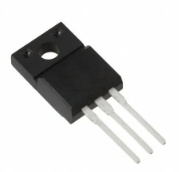
The working principle of MOSFETs is based on charge control and electric field control in semiconductors. The crystal chip is doped into an N-type or P-type semiconductor, forming an insulating layer on its surface, namely an oxide layer. This layer of oxide isolates direct contact between the metal electrode and the semiconductor, thereby achieving control of the electric field.
When a voltage is applied to the metal electrode (gate) of a MOS transistor, an electric field is formed, which acts on the doped ions in the semiconductor through the oxide layer. This electric field can cause the movement of ions, thereby changing the conductivity of the channels formed in semiconductors.
If the gate voltage is low and the channel is closed, current cannot flow through the channel. If the gate voltage gradually increases above a certain threshold voltage, the channel begins to conduct, and the MOSFET enters a conductive state, allowing current to flow through the channel. The variation of gate voltage can control the magnitude of current in the channel.
By adjusting the gate voltage, the conduction and cutoff of MOSFETs can be controlled, thereby achieving amplification or switching purposes. This working principle enables MOSFETs to achieve advantages such as high input impedance, low noise, high gain, and low power consumption, and is widely used in integrated circuits and various electronic devices.