The function of transient diodes:
Under specified reverse application conditions, when subjected to a high-energy instantaneous overvoltage pulse, its working impedance can immediately drop to a very low conduction value, allowing large currents to pass through and clamping the voltage to a predetermined level, effectively protecting precision components in electronic circuits from damage.
Selection techniques:
1. Breakdown voltage V (BR): In the area where breakdown occurs, the voltage measured at both ends of the device under the specified test current I (BR) is called breakdown voltage. In this area, the diode becomes a low impedance path.
2. Maximum reverse pulse peak current IPP: The maximum pulse peak current that the device is allowed to pass under specified pulse conditions during reverse operation. The product of IPP and maximum clamping voltage Vc (MAX) is the maximum value of transient pulse power. When using, the transient suppression diode should be selected correctly, so that the rated transient pulse power PPR is greater than the maximum transient surge power that may occur in the protected device or circuit.
3. Maximum reverse working voltage VRWM (or displacement voltage): When the device operates in reverse, the voltage value at both ends of the device under the specified IR is called the maximum reverse working voltage VRWM. Usually VRWM=(0.8-0.9) V (BR). At this voltage, the power consumption of the device is very small.
4. Maximum clamping voltage Vc (max): The maximum voltage value at both ends of the device under the action of pulse peak current Ipp is called the maximum clamping voltage. When using, Vc (max) should not exceed the maximum allowable safe voltage of the protected device. The ratio of the maximum clamping voltage to the breakdown voltage is called the clamping coefficient.
5. Reverse pulse peak power PPR: The PPR of a transient suppression diode depends on the pulse peak current IPP and the maximum clamping voltage Vc (max). In addition, it is also related to the pulse waveform, pulse time, and ambient temperature.
6. Capacitance CPP: The capacitance of a transient suppression diode is determined by the area of the silicon wafer and the bias voltage. Under zero bias conditions, the capacitance value decreases with the increase of the bias voltage. The size of the capacitor will affect the response time of the transient suppression diode device.
7. Leakage current IR: When the maximum reverse operating voltage is applied to the transient suppression diode, there is a leakage current IR in the transient suppression diode tube. When the transient suppression diode is used in high impedance circuits, this leakage current is an important parameter.
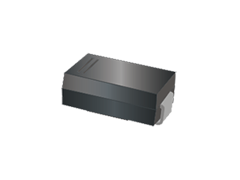
Tips for using TVS:
1. Determine the maximum DC or continuous operating voltage of the protected circuit, the rated standard voltage of the circuit, and the "high-end" tolerance.
2. The rated reverse turn off VWM of the transient suppression diode should be greater than or equal to the maximum operating voltage of the protected circuit. If the selected VWM is too low, the device may enter avalanche or affect the normal operation of the circuit due to excessive reverse leakage current. Serial connection for voltage sharing and parallel connection for current sharing.
3. The maximum clamping voltage VC of the transient suppression diode should be less than the damage voltage of the protected circuit.
4. Within the specified pulse duration, the maximum peak pulse power consumption PM of the transient suppression diode must be greater than the peak pulse power that may occur in the protected circuit. After determining the maximum clamping voltage, the peak pulse current should be greater than the transient surge current.
5. For the protection of data interface circuits, attention must also be paid to selecting transient suppression diode devices with appropriate capacitance C.
6. Choose the polarity and packaging structure of the transient suppression diode according to its purpose. The selection of bipolar transient suppression diodes for AC circuits is more reasonable; The use of transient suppression diode arrays for multi line protection is more advantageous.
7. Temperature considerations. The transient voltage suppressor can operate between -55 and+150 degrees Celsius. If a transient suppression diode is required to operate at a changing temperature, its reverse leakage current ID increases with an increase; The power consumption decreases as the junction temperature of the transient suppression diode increases, from+25 ° C to+175 ° C, with a linear decrease of approximately 50%. The rain breakdown voltage VBR increases with a certain coefficient as the temperature increases. Therefore, it is necessary to consult relevant product information and consider the impact of temperature changes on its characteristics.
Selection principle:
1、 The maximum clamping voltage VC (MAX) shall not exceed the maximum allowable safe voltage of the circuit.
2、 The maximum reverse working voltage (deflection voltage) VRWM should not be lower than the maximum working voltage of the circuit. Generally, VRWM can be selected to be equal to or slightly higher than the maximum working voltage of the circuit.
3、 The rated maximum pulse power must be greater than the maximum transient surge power that occurs in the circuit.