Schottky diodes are divided into two packaging types: wire and surface mount (SMT). Schottky diodes with wire type packaging are generally used as high-frequency high current rectifier diodes, freewheeling diodes, or maintenance diodes. It has two packaging types: multi tube and dual diode. Schottky has three pin extraction methods for diodes: common cathode (negative stage of two diodes connected), common anode (positive stage of two diodes connected), and serial connection (positive stage of one diode connected to negative stage of another diode). There are various packaging types for Schottky diodes using surface packaging, including multi tube, double tube, and triple tube, with A~19 pin extraction methods.
Schottky diodes have advantages such as high power switching frequency and reduced forward voltage, but their reverse breakdown field strength is relatively low, with most not exceeding 60V and the maximum only about 100V, which limits their application scope. For example, in power transformer (SMPS) and power factor calibration (PFC) power supply circuits, freewheeling diodes for output power switch components, high-frequency rectifier diodes above 100V for secondary coils of transformers, 600V~1.2mV high-speed diodes for RCD oil buffer power supply circuits, and 600V diodes for PFC voltage transformation can only be used, such as fast repair extrinsic diodes (FRED) and ultra fast repair diodes (UFRD).
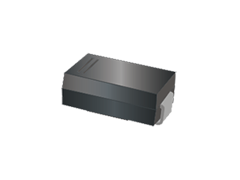
The reverse recovery time Trr of UFRD is also above 20ns, so it is not necessary to consider using 1MHz to 3MHz SMPS in industries such as space stations. Even for SMPS with a hard power switch of 100kHz, due to the high on/off losses and switching losses of UFRD and the high shell temperature, a large heat pipe heat sink is required, which increases the volume and net weight of SMPS, which is not in line with the development trend of miniaturization and lightweight.
The major defects of Schottky diodes are their low reverse bias voltage and high reverse leakage current. For example, Schottky diodes made from silicon and metal materials have a maximum rated reverse bias voltage of only 50V, while the reverse leakage current is a positive temperature characteristic, which can easily increase rapidly with temperature rise. Special attention should be paid to the hidden danger of uncontrollable heat in practical design schemes. In order to prevent the aforementioned difficulties, the reverse bias voltage of Schottky diodes in specific applications is much smaller than their rated current. However, the technology of Schottky diodes has also been developed, and their rated current for reverse bias can reach up to 200V.